Table of Contents
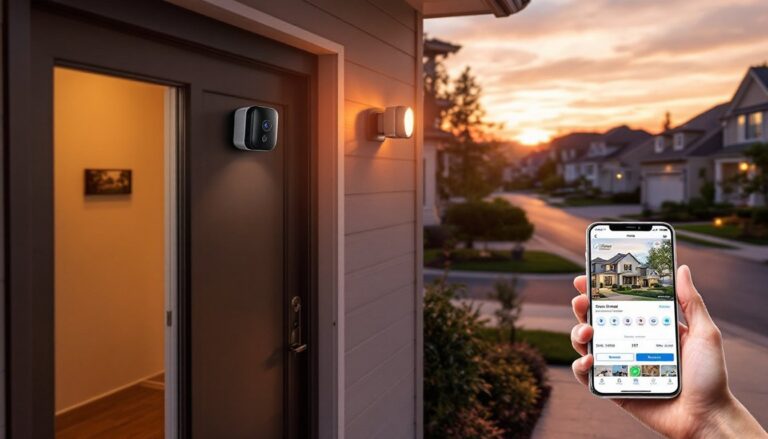
ToggleIf you’ve been shopping for home security cameras, you’ve likely noticed a growing number of cellular-connected options. Unlike traditional Wi-Fi cameras that depend on your home network, cellular security cameras use LTE or 5G data to transmit video and alerts directly to your phone. The trade-off? You’ll need a data plan. For homeowners considering this technology, understanding how much data these cameras consume and which plans make sense for your budget is essential. This guide walks you through the basics of cellular camera data plans, the factors that affect data usage, and how to choose the right option for your home.
Key Takeaways
- Cellular security camera data plans range from 1 GB to 100+ GB monthly, costing $5–$60+ depending on carrier and usage, making it essential to match your plan tier to actual camera activity.
- Video resolution is the primary data consumption driver: 1080p uses 1–3 MB per minute, while 2K uses 2–5 MB and 4K uses 5–15 MB per minute, so choosing appropriate resolution prevents bill shock.
- Motion-triggered recording consumes significantly less data than continuous 24/7 recording—a single 2K camera with motion detection could use 500 MB to 1.5 GB monthly versus 50–100 GB with continuous recording.
- Cellular cameras excel in areas with weak Wi-Fi, vacation properties, or during internet outages, offering independence from your home network while keeping security live even when your connection fails.
- Fine-tune motion detection sensitivity, adjust frame rates to 15 fps, and add a 20–30% buffer to your estimated data needs when selecting a cellular security camera data plan to avoid unexpected overages.
Why Cellular Data Plans Matter for Home Security Cameras
Cellular security cameras are particularly useful for homeowners without reliable Wi-Fi coverage, those with unstable internet, or anyone who wants a completely independent security system that doesn’t depend on their home network. When the power goes out or your internet drops, a cellular camera keeps working.
But, video streaming consumes data, sometimes a lot of it. If you don’t choose the right plan, you could face overage charges or throttled speeds that make video nearly unwatchable. Conversely, overshooting your actual needs means paying for capacity you won’t use. The key is matching your usage patterns to an appropriate data tier.
Most cellular camera manufacturers partner with carriers like Verizon, AT&T, T-Mobile, or MVNOs (mobile virtual network operators) to offer bundled or standalone plans. These plans typically range from 1 GB to 100+ GB per month, with pricing from about $5 to $50 or more depending on the carrier, region, and contract terms. Understanding your data appetite upfront prevents surprises at billing time.
Understanding Cellular vs. Wi-Fi Security Cameras
Before diving into data plans, it’s worth clarifying why someone would choose cellular over Wi-Fi. Both work, but they suit different scenarios.
Wi-Fi cameras connect to your home network and push video to the cloud or a local hub. They’re typically cheaper upfront and don’t require an ongoing data plan beyond your existing internet service. But, they rely entirely on your Wi-Fi signal strength and are vulnerable if your internet fails. They also add traffic to your home network, which can slow other devices if your bandwidth is limited.
Cellular cameras use a SIM card and carrier connection, much like your phone. They work anywhere there’s cellular coverage, your driveway, a rental property miles away, or a cabin with no internet service. They’re independent of your home network and keep recording even during internet outages. The downside is the monthly data cost and the need for adequate signal strength at the installation location.
For most homeowners, a combination approach works well: Wi-Fi cameras inside and around the house, with a cellular camera positioned where Wi-Fi is weak or as a redundant outdoor option.
Advantages of Cellular Connectivity
Cellular cameras shine in specific situations. Redundancy is one: if your internet fails, your cellular camera stays live. This is especially valuable for vacation homes or properties you can’t check on daily. Coverage flexibility matters too, cellular cameras don’t require running Ethernet cable or establishing Wi-Fi repeaters, which is a real time-saver on large properties.
Signal independence is another advantage. A cellular camera on your front gate works without any home infrastructure, making it ideal for remote entrances or properties where running network cable isn’t practical. Finally, early warning capability means you get alerts and can view live footage instantly, even if you’re far from home and your home internet is down. For homeowners concerned about security when they’re away, that peace of mind has real value.
Key Factors Affecting Data Usage and Plan Selection
Cellular camera data consumption isn’t a fixed number, it varies based on several factors. Getting these right is crucial to avoiding bill shock or service interruptions.
Video Quality and Resolution Impact
Video resolution is the biggest driver of data usage. A 1080p (2 MP) camera transmits roughly 1–3 MB per minute of continuous recording, depending on compression and refresh rate. Jump to 2K (4 MP), and you’re looking at 2–5 MB per minute. 4K (8 MP) can consume 5–15 MB per minute or more. These numbers assume H.264 or H.265 video compression (HEVC), which are standard for modern cameras and significantly reduce file size compared to uncompressed video.
Most homeowners don’t need 4K outdoor surveillance, 1080p or 2K is crisp enough for license plate recognition and identifying faces at typical residential distances. Keeping resolution reasonable is your first line of defense against data overages. Some cameras let you adjust recording quality in their app, which is helpful: use high quality for important clips and lower quality for routine monitoring.
Frame rate (measured in frames per second or fps) also matters. A camera recording at 30 fps uses roughly twice the data of one recording at 15 fps. For most home security, 15 fps provides smooth, clear motion without excessive data consumption.
Recording Frequency and Motion Detection Settings
How often your camera records dramatically affects data use. Continuous recording (24/7) will consume your data allocation fastest and isn’t usually necessary for home security. Motion-triggered recording is far more practical: the camera only uploads footage when it detects movement, dramatically reducing data usage.
Motion detection settings are your second control lever. A well-tuned motion detector might trigger on a person or vehicle but ignore wind-blown leaves or passing clouds. Poorly configured, it records every shadow that crosses your driveway, burning through data unnecessarily. Most cameras let you set motion sensitivity, detection zones, and time-of-day schedules in their mobile app, use these features.
Here’s a practical example: assume a 2K camera recording motion-triggered clips at 30 fps. If your driveway gets 20–30 meaningful motion events per day, each lasting 30–60 seconds, you’re looking at roughly 500 MB to 1.5 GB per month. Add a second camera and double that. For comparison, the same two cameras set to continuous 1080p recording 24/7 could consume 50–100 GB monthly, far exceeding most budget plans.
Live view requests (when you manually check your camera from your phone) also use data, though typically less than recorded clips. A few minutes of daily live viewing adds maybe 100–300 MB monthly, depending on resolution.
Comparing Popular Cellular Data Plan Options
Most carriers and MVNO providers offer tiered cellular plans tailored to security camera use. Here’s what you’ll typically find:
Starter plans (1–5 GB/month) cost $5–$15 and work for homeowners running one camera with motion detection at 1080p. This covers roughly 300–1,500 motion-triggered clips per month, depending on resolution and clip length. Good for a single driveway or entrance camera.
Mid-tier plans (10–30 GB/month) run $15–$35 and support two to four cameras with motion detection, or one camera with occasional continuous recording. This tier suits most homes with multiple camera locations and is the sweet spot for average homeowners.
High-capacity plans (50–100 GB/month) cost $35–$60+ and are for properties with many cameras, continuous recording, or high-resolution video. These also serve as failover plans for homes that want cellular backup alongside Wi-Fi cameras.
MVNOs like SafeLink, Visible, or TracFone-partnered services often offer more flexible, smaller-capacity plans at lower cost than major carriers. But, coverage and customer support vary. Research coverage maps for your specific location before committing.
Some camera manufacturers, including popular brands reviewed on smart home technology reviews, bundle discounted data plans with their hardware. These bundled deals sometimes undercut à la carte carrier plans, especially if you’re buying multiple cameras. Always compare the bundled price against buying a camera and plan separately, sometimes the manufacturer’s deal genuinely saves money: sometimes it doesn’t.
When estimating your data needs, reference the manufacturer’s specs and the usage examples above, then add a 20–30% buffer for overage protection. If you calculate 8 GB of expected usage, buy a 10 GB plan. Better to have unused data than to face throttling or overages. Most carriers let you adjust plan tiers mid-month or carry unused data to the next billing cycle, check your carrier’s policy before signing up.
For homeowners shopping cameras, resources like product reviews and home technology guides and smart home news and reviews offer comparisons of different camera models and their data-plan partnerships, which can help you identify the best overall value for your setup.