Table of Contents
ToggleWireless home security camera systems have moved beyond luxury gadgets into practical necessities for modern homeowners. Whether you’re protecting a sprawling property or monitoring a front porch, the right wireless setup gives you visibility without running cables through walls or hiring an electrician. The technology has matured significantly, better image sensors, smarter cloud storage, and easier installation mean you can set up a functional system in an afternoon. This guide walks you through what matters when shopping, what to watch out for during setup, and how to keep your cameras performing reliably year-round.
Key Takeaways
- Wireless home security camera systems eliminate installation complexity and deliver flexibility that hardwired setups can’t match, allowing homeowners to set up functional monitoring in an afternoon without cables, conduit, or electrician coordination.
- Resolution (1080p, 2K, or 4K) and night vision capabilities—infrared for absolute darkness or color night vision for identifying details—are critical features that directly impact your ability to recognize faces, license plates, and intruder clothing.
- Verify WiFi coverage at camera locations before purchasing; dual-band WiFi (2.4GHz and 5GHz) routers with strong signal strength are foundational to preventing dropout and lag in wireless camera performance.
- Battery-powered wireless cameras typically last 3–6 months per charge, so quarterly battery checks and solar panel add-ons for trickle-charging help prevent coverage gaps during critical seasons.
- Security best practices including strong unique passwords, two-factor authentication, regular firmware updates, and understanding your provider’s encryption and data retention policies protect both your system and privacy.
- Start with one or two cameras on critical zones like the front door or garage, then expand your wireless security system as you refine coverage needs and identify blind spots in your home’s protection.
Why Wireless Security Cameras Matter for Modern Homes
A wireless home security camera system offers flexibility that hardwired setups can’t match. You install a camera wherever you need it, above the garage, pointed at the side gate, watching the front door, without cutting into drywall or running conduit. This matters for renters, too: you can mount equipment and take it with you when you move.
Wireless systems also dodge the installation headaches. No trenching for cables, no pulling Romex through joist bays, no coordinating with licensed electricians for code compliance on hard-wired circuits. A homeowner can unbox a camera, connect it to WiFi, and start monitoring within minutes. That simplicity doesn’t mean the system lacks sophistication, modern wireless cameras record in 2K or 4K resolution, see clearly at night with infrared or spotlight modes, and store footage on cloud servers or local storage.
The peace of mind is real. Real-time alerts let you know when motion occurs at your property. Two-way audio means you can communicate with someone at your door. Timestamped video provides evidence if a break-in occurs. When evaluating whether to install wireless cameras, consider your WiFi coverage first, if your router barely reaches the garage, you’ll struggle with dropout and lag.
Key Features to Look For in a Wireless Camera System
Not all wireless cameras deliver the same experience. Knowing what separates a solid system from a mediocre one prevents buyer’s remorse and frustration during setup.
Resolution and Night Vision Capabilities
Resolution matters more than you might think. A 1080p camera (1,920 × 1,080 pixels) captures adequate detail for recognizing motion and broad activity. 2K or 2560p models deliver crisper footage useful for identifying faces or vehicle license plates. 4K (3,840 × 2,160) provides the sharpest image but demands more bandwidth and cloud storage.
Night vision is non-negotiable for outdoor cameras. Infrared (IR) night vision illuminates a scene with invisible infrared light, rendering everything in black and white. It works reliably but can reflect off windows or rain, creating glare. Color night vision or low-light modes use larger sensors and computational photography to capture color even in near-dark conditions, useful for seeing clothing colors or identifying intruders. Some cameras combine both: infrared for absolute darkness and color night vision as a fallback in dim light.
Check the night vision range. A spec saying “up to 30 feet” means useful detail extends roughly 30 feet from the camera. Beyond that, you’re looking at silhouettes. For a driveway or yard, 20–30 feet usually suffices. For a long perimeter, you might need wider coverage or multiple cameras.
Connectivity and Storage Options
WiFi strength is the foundation of reliability. Look for cameras supporting dual-band WiFi (2.4GHz and 5GHz). The 2.4GHz band travels farther but handles lower bandwidth: 5GHz offers faster speeds but shorter range. A camera that intelligently picks the best band adapts to your home’s layout.
Cloud storage is the standard, footage uploads to the provider’s servers. Plans typically range from free with limited retention (24 hours) to paid tiers (30 days or longer). Be honest about whether you’ll pay $3–5 monthly per camera: costs add up fast with multiple units. Local storage, saving video to a microSD card or home hub, keeps footage private and doesn’t require subscription fees, but you’re responsible for managing storage and security.
Look for two-way audio so you can speak through the camera (doorbell, package delivery coordination). Motion detection triggers alerts and recording: customizable zones let you ignore movement from trees or passing cars, reducing false alarms. Person detection uses AI to distinguish humans from animals or shadows, further cutting notification fatigue.
Step-by-Step Installation Tips for DIY Homeowners
Installation for wireless cameras is straightforward, but skipping prep work causes problems. The steps below assume you’re mounting an outdoor camera: indoor placement is even simpler.
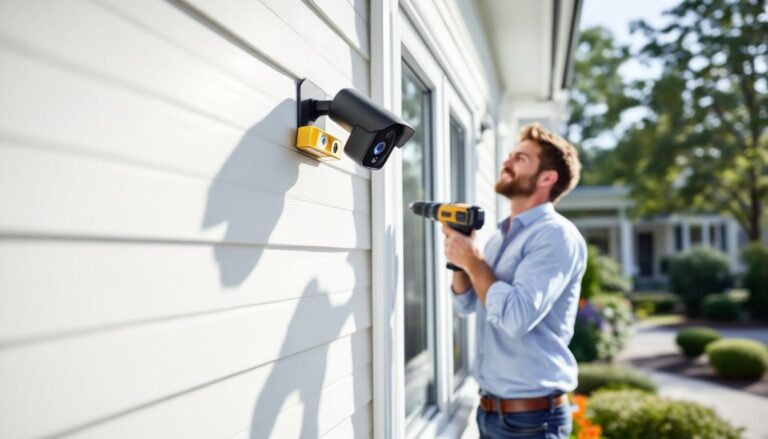
1. Choose your location. Mount the camera 8–10 feet high for optimal viewing angle and to deter tampering. Avoid pointing directly at the sun or bright windows, which washes out the image. Test WiFi signal strength at the spot, use your phone to check signal bars near where the camera will sit. If signal is weak, plan to add a WiFi extender or mesh node before installing.
2. Gather your tools. You’ll need a drill with masonry or wood bits (depending on substrate), a level, a measuring tape, a stud finder (for solid reference points), and a security bit set if the camera uses tamper-resistant screws. Most cameras ship with anchors and fasteners rated for concrete, stucco, vinyl siding, or wood. Wear safety glasses when drilling overhead: dust falls.
3. Mark and drill mounting holes. Use the camera’s mounting bracket as a template. Mark hole locations with a pencil. For concrete or brick, use a carbide or masonry bit and start slowly to avoid slipping. For wood siding or soffit, a standard wood bit works. If fastening to drywall without a stud behind it, use heavy-duty wall anchors rated for the camera’s weight, most cameras weigh 3–8 ounces, so standard anchors suffice. Drill straight and level: a crooked mount looks sloppy and affects the viewing angle.
4. Install the mounting bracket. Secure the bracket to the wall, ensuring it’s level. This is where a 2-second-fix can prevent days of frustration, take the time to get it right now rather than adjusting later.
5. Mount the camera and route the cable. Attach the camera to the bracket. Route the power cable along the roof line, soffit, or down the wall using cable clips or conduit to keep it tidy and protected from weather. If wireless, you don’t need a power cable unless the camera has a plug: battery-powered models charge via USB.
6. Power on and connect to WiFi. Download the manufacturer’s app, power the camera, and follow the setup wizard. Most cameras emit a WiFi hotspot initially: your phone connects to scan a QR code or enter credentials. Once paired with your home network, you can access the camera remotely from anywhere.
7. Test and adjust. View the live feed, test motion detection, and verify night vision quality. Adjust the mounting angle if needed. Test two-way audio and ensure alerts reach your phone. It takes five minutes and prevents discovering dead spots or blind angles after you’ve finished.
A wireless camera system doesn’t require a permit for most residential installations, but check your local code if you’re in a historic district or HOA-governed community.
Best Practices for Optimal Performance and Security
A wireless camera only works as well as its WiFi connection and battery health. Following these habits keeps your system reliable and secure.
Maintain consistent WiFi coverage. Position your router centrally and elevated: signal doesn’t penetrate metal or dense walls efficiently. If a camera is at the far end of the house, a WiFi extender or mesh node placed halfway bridges the gap. Test signal strength at camera locations before finalizing placement.
Update firmware regularly. Manufacturers release updates to patch security vulnerabilities and improve performance. Most cameras notify you when updates are available: don’t ignore them. Schedule updates during off-peak hours so any brief connection loss doesn’t disrupt active recording.
Protect your login credentials. Use a strong, unique password for your camera app account. Don’t reuse passwords across accounts: if one service is compromised, attackers don’t gain access to all your systems. Enable two-factor authentication if your provider offers it.
Review privacy settings and cloud storage. Know whether video is encrypted in transit and at rest. Understand your provider’s data retention policy and who can access footage. If you have guests or service personnel, consider disabling cameras in private areas or notify them beforehand, privacy laws vary by location.
Check batteries quarterly. Battery-powered cameras usually last 3–6 months per charge depending on motion frequency and climate. Cold weather drains batteries faster. If your system includes motion detection, frequent triggering depletes the battery quicker. Charge proactively rather than waiting for a dead battery to interrupt coverage. Several wireless systems use solar panel add-ons to trickle-charge batteries: if your camera sits in sunlight, these pay for themselves by eliminating winter charging chores.
Hardwired cameras stay powered reliably but demand either an outdoor outlet (GFCI-protected) or a run from an indoor circuit. A hardwired system avoids battery maintenance but requires planning and potentially professional installation for code compliance. Many homeowners choose a hybrid: hardwired cameras on critical zones (front door, garage) and battery-powered units for secondary areas.
Think of a wireless security system like any other home investment, regular attention and smart choices ensure years of trouble-free operation. A video doorbell security setup complements whole-home monitoring by capturing doorstep activity. For comprehensive protection strategies, reviewing options like home surveillance and pet-friendly security systems helps you tailor a solution that fits your household.
According to recent reviews on Best home security cameras in 2026, wireless models dominate new installations due to ease of setup and reliability. Experts at Good Housekeeping consistently recommend testing systems in real-world conditions before committing, and Digital Trends highlights smart home integration as a growing expectation. If you’re considering a complete system overhaul, professional options like Brinks Home Security or platforms featuring advanced hubs like Lorex Smart Home provide alternative paths to wireless coverage without DIY installation.
Conclusion
Wireless home security cameras deliver real protection without the installation headaches of hardwired systems. Focus on resolution and night vision for your environment, verify WiFi coverage before buying, and spend the modest time needed for proper mounting. Regular firmware updates, battery checks, and password hygiene keep your system secure and functional for years. Start with one or two cameras and expand as you refine what coverage matters most for your home.