Table of Contents
ToggleIf you’re considering adding a security layer to your home but don’t want to hire a professional installer, Alexa security cameras offer a solid DIY option that integrates directly with your smart home ecosystem. These cameras let you monitor your property in real time, receive alerts when motion is detected, and access footage from your phone or Echo devices, all without wiring or complex setup. Whether you’re protecting a front door, driveway, or backyard, this guide walks you through what Alexa cameras are, how they work, which models are worth your money, and how to set them up properly so they actually work when you need them.
Key Takeaways
- Alexa security cameras offer a DIY-friendly, no-professional-installation alternative that integrates directly into your smart home ecosystem for real-time monitoring and motion alerts.
- Strong Wi-Fi connectivity is essential—cameras go offline without a stable internet connection, so consider mesh systems or extenders positioned near your camera locations.
- Popular models like Ring Video Doorbell, Ring Stick Up Cam, and Wyze Cam v4 range from $40–$200, with differences in resolution, field of view, and power type (battery, plug-in, or wired).
- Proper installation requires checking Wi-Fi signal strength before mounting, planning viewing angles carefully, and using outdoor-rated fasteners at 8–10 feet height to catch faces effectively.
- Optimize your Alexa security camera system by fine-tuning motion detection zones, enabling local or cloud storage backup, and regularly testing night vision and audio quality.
- Protect your privacy by using strong Wi-Fi encryption (WPA3 or WPA2), notifying neighbors of camera placement, and choosing models with local storage options if you prefer to limit cloud data access.
What Are Alexa Security Cameras and How Do They Work
An Alexa security camera is any camera, wired, battery-powered, or plug-in, that connects to your home Wi-Fi network and is compatible with Amazon’s Alexa ecosystem. Unlike traditional CCTV systems, these cameras don’t require a separate hub or professional monitoring service. They stream video to Amazon’s cloud servers (or local storage on some models) and feed into your Alexa app, your Echo Show, or compatible third-party devices.
The basic workflow is straightforward: the camera detects motion or sound, sends a notification to your phone, and lets you view a live feed or recording within seconds. Most models offer two-way audio, so you can speak to someone at your door without opening it. Video is typically stored in Amazon’s cloud for 24 hours on free plans, or longer if you pay for a subscription (usually $10–$15 per month per camera).
Important: Internet connectivity is non-negotiable. If your Wi-Fi drops, the camera goes offline. This means your home security relies on bandwidth stability. Mesh Wi-Fi systems or extenders positioned near cameras reduce dropout risk.
Key Features and Compatibility
Almost all modern Alexa cameras share core features: night vision (usually infrared), motion and sound detection with customizable zones, two-way talk, and integration with Alexa routines (automation). Compatibility matters because not all cameras work with every Alexa device. Amazon Ring cameras (owned by Amazon) integrate seamlessly, but third-party brands like Wyze, Logitech, and Arlo also support Alexa, though some features may be limited in Alexa’s app versus the manufacturer’s proprietary app.
Resolution typically ranges from 1080p to 2K: higher resolution helps when identifying faces or reading license plates. Field of view (the visible angle) ranges from 110 to 180 degrees. A 180-degree lens covers more ground but distorts edges: a 110-degree lens is narrower but clearer. Choose based on what you’re monitoring. For a front door, 110–140 degrees is standard. For a wide driveway, opt for 160 degrees or wider.
Popular Alexa-Enabled Security Camera Models
Ring Video Doorbell (wired or battery versions) remains the most popular choice because it’s tightly integrated with Alexa and includes a physical doorbell button. Recent models offer dual-band Wi-Fi, 1080p or 2K resolution, and customizable motion zones to reduce false alerts. Expect to spend $100–$200 depending on generation and wiring setup.
Ring Stick Up Cam is a compact battery-powered or plug-in option that mounts almost anywhere, eaves, trees, corners. It lacks the doorbell button, but it’s flexible and reliable. Pricing runs $80–$150.
Wyze Cam v4 is a budget-friendly plug-in camera under $40 that works with Alexa (though some features live in Wyze’s app, not Amazon’s). It offers 1080p, night vision, and motion detection. It’s solid for secondary cameras or renters who can’t modify walls.
Arlo Essential Wired delivers 2K resolution, color night vision, and wider field of view for around $100. It integrates with Alexa but keeps most controls in Arlo’s ecosystem.
For a detailed comparison, CNET’s product reviews and Digital Trends’ home tech coverage regularly test and update camera rankings. Also worth reviewing is Amazon Cloud Cam’s affordability focus if you want budget options without sacrificing cloud storage integration.
Installation and Setup Essentials
Most Alexa-compatible cameras are installed without professional help, but prep work matters.
Before mounting:
- Check Wi-Fi signal strength. Use a Wi-Fi analyzer app to confirm your network reaches the intended camera location. Weak signal (below -70 dBm) causes dropouts. If needed, add a mesh node or extender near the camera.
- Plan the view angle. Sight-line the location from different vantage points. Make sure trees, pipes, or overhangs won’t block the lens. Test with your phone camera as a reference.
- Verify power availability. Battery cameras need charging every 1–3 months depending on activity. Plug-in models must reach an outlet: outdoor outlets require GFCI protection (this is code in most jurisdictions). Wired Ring doorbells need an existing doorbell transformer: if you lack one, plan to install one or hire an electrician.
Physical installation:
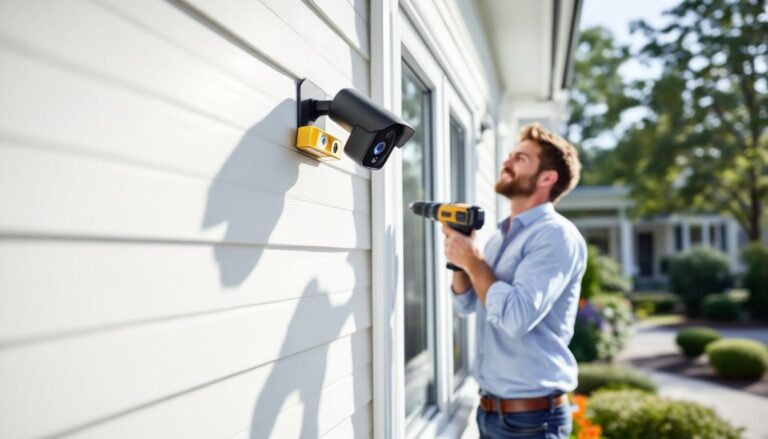
- Use stainless steel or outdoor-rated fasteners to avoid rust. Standard drywall anchors fail outdoors: use concrete anchors for brick, masonry screws for stone.
- Mount cameras 8–10 feet high for doorways (out of easy reach) and slightly downward-angled to catch faces, not just foreheads.
- For battery models, ensure the battery compartment faces down or sideways (not up) to prevent water pooling.
Digital setup:
- Download the manufacturer’s app (e.g., Ring, Wyze, Arlo) and create an account.
- Add the camera to your home Wi-Fi network via the app (this typically takes 2–5 minutes).
- Link the camera to your Alexa account through Alexa app > Devices > Cameras.
- Test two-way audio, night vision, and motion alerts from your phone before leaving the setup screen.
- Set up Alexa routines if desired (e.g., “Alexa, show front door” displays the live feed on your Echo Show).
Common hiccup: If the camera won’t connect to Wi-Fi, restart your router, move the camera closer temporarily, and ensure 2.4 GHz band is enabled on your router (some 5 GHz-only networks block older camera hardware). Most modern cameras support both, but verify before buying.
Optimizing Your Home Security With Alexa Cameras
Installation is step one. Optimization is the difference between a camera that works and one that sits there.
Fine-tune motion detection. Most cameras default to high sensitivity, which causes false alerts from shadows, animals, or passing cars. Use the app to create activity zones (rectangular regions where motion triggers alerts) and adjust sensitivity by time of day. For example, high sensitivity during night hours, low during day when wind and sunlight cause false positives.
Use Alexa routines strategically. You can automate camera actions based on time, location, or other triggers. Example: “When I leave home, turn on all camera motion alerts and send notifications to my phone.” Or “When motion is detected on the front door between 9 PM and 7 AM, announce it on my Echo speaker.”
Enable cloud storage or local backup. Free 24-hour cloud storage is useful, but if footage matters (say, for evidence), upgrade to 30-day or longer retention. Some cameras also support microSD cards for local backup, this helps if your internet cuts out or Wi-Fi goes down.
Test regularly. Walk past cameras monthly to confirm motion triggers, check that night vision is clear, and listen for audio quality. A camera working perfectly until it fails in a real emergency is worse than no camera.
Consider a Lorex Smart Home Security Center if integrating multiple cameras. Some homeowners prefer a dedicated hub that syncs multiple devices and includes local storage, reducing reliance on cloud subscriptions.
Privacy and Safety Considerations
Smart cameras are powerful tools, but they collect sensitive data. Here’s what to keep in mind.
Amazon’s access to footage. Cloud storage means Amazon (and, theoretically, law enforcement with a warrant) can access your video. If that’s a concern, prioritize cameras with local storage options (microSD or an on-site hub) and disable cloud backup. Be aware that some features (like person detection AI or two-way audio) may require cloud processing.
Notify neighbors and guests. If your camera points toward a neighbor’s window or property, disclose this. Even if legal, undisclosed surveillance damages relationships and can open you to liability. Use motion detection zones to minimize overlap with neighboring properties.
Secure your Wi-Fi network. A weak Wi-Fi password or unencrypted network lets attackers intercept video or hijack your camera. Use WPA3 encryption if your router supports it: at minimum, use WPA2 with a strong password (16+ characters, mixed case and numbers).
Physical security. Wired cameras are harder to tamper with than battery models, which can be stolen. If theft is a risk in your area, mount cameras out of easy reach or use a wired model.
Check local regulations. Some jurisdictions restrict camera placement (especially if pointed at neighbors). A few states require consent before recording audio. Familiarize yourself with local rules before mounting.
Conclusion
Alexa security cameras are accessible, affordable DIY tools for monitoring your home without hiring installers or signing long-term monitoring contracts. Success depends on three things: proper placement and power planning, correct Wi-Fi setup, and ongoing attention to alerts and footage. Pick a model that fits your budget and use case, install it right the first time, and revisit your settings seasonally. Paired with good passwords, strong Wi-Fi security, and honesty with neighbors, a camera or two can give you genuine peace of mind, not just a false sense of security.